
Sometimes when you are looking for a job as a Software Tester or even when you work as a tester, you are considering the things that make you a great tester (when you are working already as a tester), or what skills are needed to get this position (when you are looking for).
What skill set do you need?

Technical skills are so important to get a job as a Software tester and to be a great tester. However, we can’t forget about soft skills. A tester who possesses wonderful technical skills can’t be a great one without the soft skills to work with others. But the tester who has a lot of soft skills that help at work can’t be a good one without technical skills.
We need to simply say that the connection of soft and technical skills can let us be better testers or get the job as a Software Tester and stand out from other people who apply for this position.
In this post, I will state 5 soft skills and 5 technical skills that I think personally are the best set for every tester.
Technical set of skills
Let’s start with the technical skills. Five of them are Elementary knowledge about testing, Web and Mobile technologies, Basic programming knowledge, Automation testing, and agile testing. We will now describe all of them.
Elementary knowledge about testing
Every tester should read the ISTQB Foundation Level syllabus at least once. Why? It’s a really simple reason to do that. In this syllabus, you can find all the elementary knowledge about testing. Test principles, techniques, heuristics, etc.
And here I am not saying that everyone needs to have the ISTQB certification (that helps a lot when you are looking for a new job anyway), but if you don’t want to spend money on the exam (for any reason), just simply read the syllabus (it can be downloaded in many languages from the official ISTQB website for free).
If you want to read something more, I can recommend books about ISTQB that explain more for people who want to better understand testing (see this post to view where to buy the books).
Web and Mobile technologies

Every tester (both works for a long time in the testing industry as well as those who are looking for a job) should be aware of the latest technologies that are trending in web and mobile. It will help them to understand the type of application, its build, and scalability. Hence, they will be able to apply an appropriate technique to test that software.
Testers ought to keep an eye on the latest news about web and mobile technologies as well as trends because it is more than helpful in understanding the coding architecture and technical challenges to deliver effective solutions.
Basic programming knowledge

When the tester hears that they should know programming, it doesn’t mean they should be able to code at the same level as a developer. However, it’s so important to understand the insights of the application so that it becomes easy for a tester to understand its functionality and create tests appropriately.
Basic knowledge of programming can also help the tester to find an issue and report it on a defect management tool to allow the developer to fix the issue faster and more effectively. I would recommend learning at least the basics of one programming language for a better understanding of the software functionality.
Automation testing
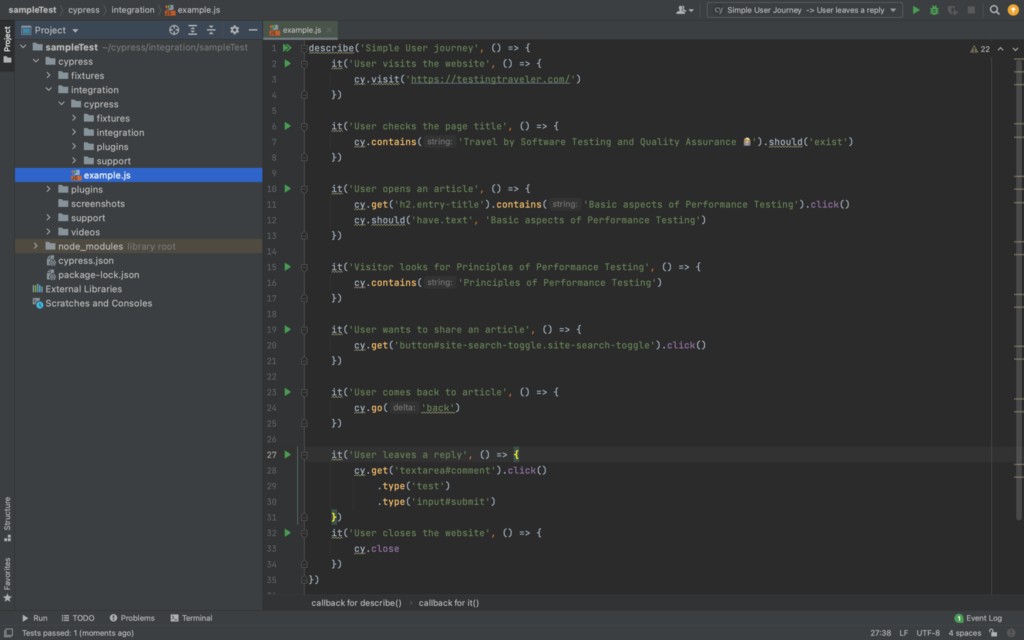
Basic programming skills will be very useful when we would like to automate our tests. Manual testing is a really good way of testing as we are able to rate the software quality based on user experience. However, sometimes we have many tests that require the same set of actions, so it takes a lot of time to execute by repeating the same actions.
In that situation, automation testing can be so helpful. One automation script can be run, for instance, for two, three, or even more tests. The ability to code, even basic, can be valuable to use in creating automated test scripts.
There are a lot of automation testing frameworks, such as Selenium WebDriver, Cypress, etc. You can read more about them here: Selenium WebDriver and Cypress.
Test techniques and tools knowledge

It’s crucial for every tester to know about the usage of test tools. When working on complex projects, we need to report the defects that we’ve found. To do that, we know how to use the testing tools. It is worth learning about the most popular, for instance, Jira, Bugzilla, etc., to spend less time on learning later and onboard faster at work.
Soft skills set
Technical skills are important. But let’s also see 5 soft skills that can be so useful for every tester, especially for the junior tester. These are patience, curiosity, and creativity, communication skills, teamwork, but also individual work, self-organisation, and time management
Communication skills

When you are a tester, you need to communicate with people in the team. You could communicate with a Business analyst to gather the requirements or send queries about them when creating the test scripts or even during execution if unsure about the test outcome (requirements are changing dynamically, and when the test scripts are created, they can differ from the tested version of the system under test). You ought to communicate your work progress with your test management or even work colleagues. Sometimes you need to talk with technical people, such as technical engineers, etc. That’s why it’s so important to have good communication skills.
Curiosity and Creativity

When it comes to creating the test documentation, such as test plans, test scripts, or test reports, you need to be curious to dig deeper to find the answers to questions that you have about the requirements.
If you ask more questions, you get more answers, which can help you better understand the work assigned and be more effective.
Also, when you can’t view the system under test and need to create the scripts only based on requirements, it’s so important to be curious and ask more questions to make the scripts make more sense.
Patience

When executing the tests, you need to be aware that the system may not work as expected. In this situation is more than important that you are calm and patient. Sometimes, you are also waiting for bug fixes, and it takes so long that you are slowly getting impatient, but you also need to understand that developers are fixing not only bugs discovered by you but also bugs discovered by the whole team.
There are many more situations in which you need to be patient, as these presented here are only examples. A good tester is a tester who is patient and thinks realistically about the project processes.
Teamwork but also Individual work

Sometimes, test management assigns the work to the team by dividing them into groups. It’s crucial to be able to work with a team to make the work faster and more effective.
Teamwork is so important, and it is one of the main things that recruiters ask during the interview.
However, there are also situations where the work is assigned only to you, and you will need in this situation work individually. It’s key that you can do your work effectively both alone and within the team.
Self-organisation and Time management
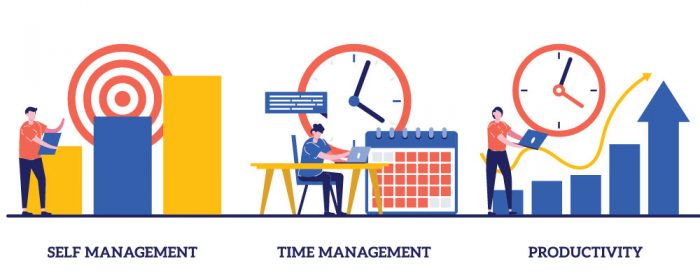
It is key that you can organise your work effectively as well as manage your time in the testing industry. It is crucial, especially when the test manager wants you to estimate when your work will be delivered, and if it will be delivered on time. Sometimes you get the work that is assigned to the group that you are in. It is a good idea to talk about the time estimation with other testers to make sure that you all will be able to provide your work on time.
Also, when you will specify when you will be able to deliver your work, you will need to organise that to provide it within this timeframe. That is why so important that you can organise your own work when working individually as well as cooperate with other testers to organise your work when working in a team.
Summary
As you can see, there are not only technical skills required to become a great tester. Soft skills are also important; that’s why we need to possess these skills to do our work more effectively.
I hope that you enjoyed reading this post and found some useful information.
The next post will arrive soon 🙂
Graphics with hyperlinks used in this post have a different source, with the full URL included in the hyperlinks.